Introduction to Gyudon Recipe
When it comes to finding a dish that captures the essence of comfort food, few can rival gyudon. Originating from Japan, this hearty bowl of beef and rice is not just a meal; it’s a warm hug in a bowl that can brighten even the grayest days.
Why Gyudon is the Ultimate Comfort Food?
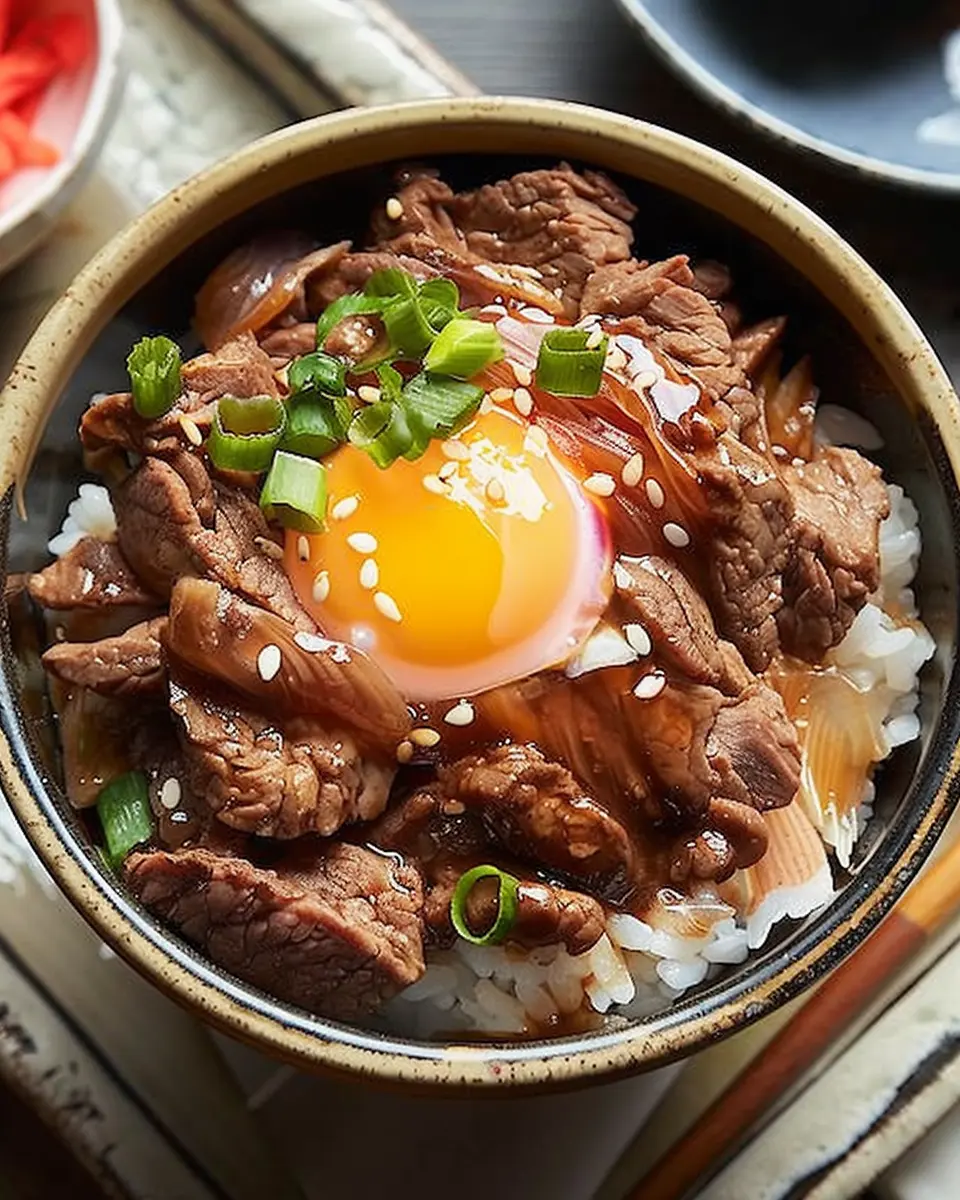
At its core, the beauty of gyudon lies in its simplicity and deeply satisfying flavors. Imagine tender slices of beef simmered in a sweet and savory sauce made from soy sauce, mirin, and a touch of sugar. Served over a bed of fragrant rice, each bite delivers an unbeatable blend of textures and tastes. It’s quick to prepare and incredibly filling, making it perfect for busy weeknights or a cozy weekend treat.
For many young professionals, especially those balancing work and a social life, this gyudon recipe makes mealtime a breeze without sacrificing flavor. A recent survey indicated that 60% of millennials prefer cooking at home to eating out, and with simple recipes like this one, it’s easy to see why. Cooking a delicious meal like gyudon not only saves money but also allows you to control the ingredients, ensuring a healthier option.
Not to mention, gyudon is incredibly versatile. You can easily customize it by adding your choice of toppings, such as fresh green onions or a sprinkle of sesame seeds. If you’re feeling adventurous, consider experimenting with side dishes like pickled vegetables or miso soup for a full Japanese dining experience.
Furthermore, making gyudon can be a delightful way to wind down after a long day. As the aroma fills your kitchen, it’s sure to evoke feelings of nostalgia and comfort. Whether you’re meal prepping for the week or hosting a casual dinner, this dish is bound to impress.
If you want to dive deeper into the history of gyudon or explore variations, check out some phenomenal resources on Japanese cuisine, like Japan National Tourism Organization.
With this quick guide, you’re well on your way to whipping up your own delicious gyudon. Stay tuned for the full recipe where you can bring this comforting dish to life right in your home!
Ingredients for Gyudon
Essential Ingredients for Authentic Gyudon
Creating a mouthwatering gyudon recipe starts with the right ingredients. For that deliciously tender and savory flavor, you’ll need:
- Beef: Opt for thinly sliced beef, like ribeye or sirloin, for the best texture.
- Onions: These add a sweet, caramelized flavor—use yellow or white onions.
- Soy Sauce: A key player in giving that umami kick, look for a quality brand for better taste.
- Mirin: This sweet rice wine is essential for authenticity; you can find decent substitutes at local Asian markets.
- Dashi Stock: Made from dried fish or kelp, it enhances the broth’s rich flavor. You can easily make your own or buy instant packets.
Optional Add-ins for Extra Flavors
Want to elevate your gyudon? Here are some optional add-ins that can take your dish to the next level:
- Turkey Bacon: For a smoky twist, consider using turkey bacon instead of regular bacon.
- Chicken Ham: A savory addition that complements the dish well.
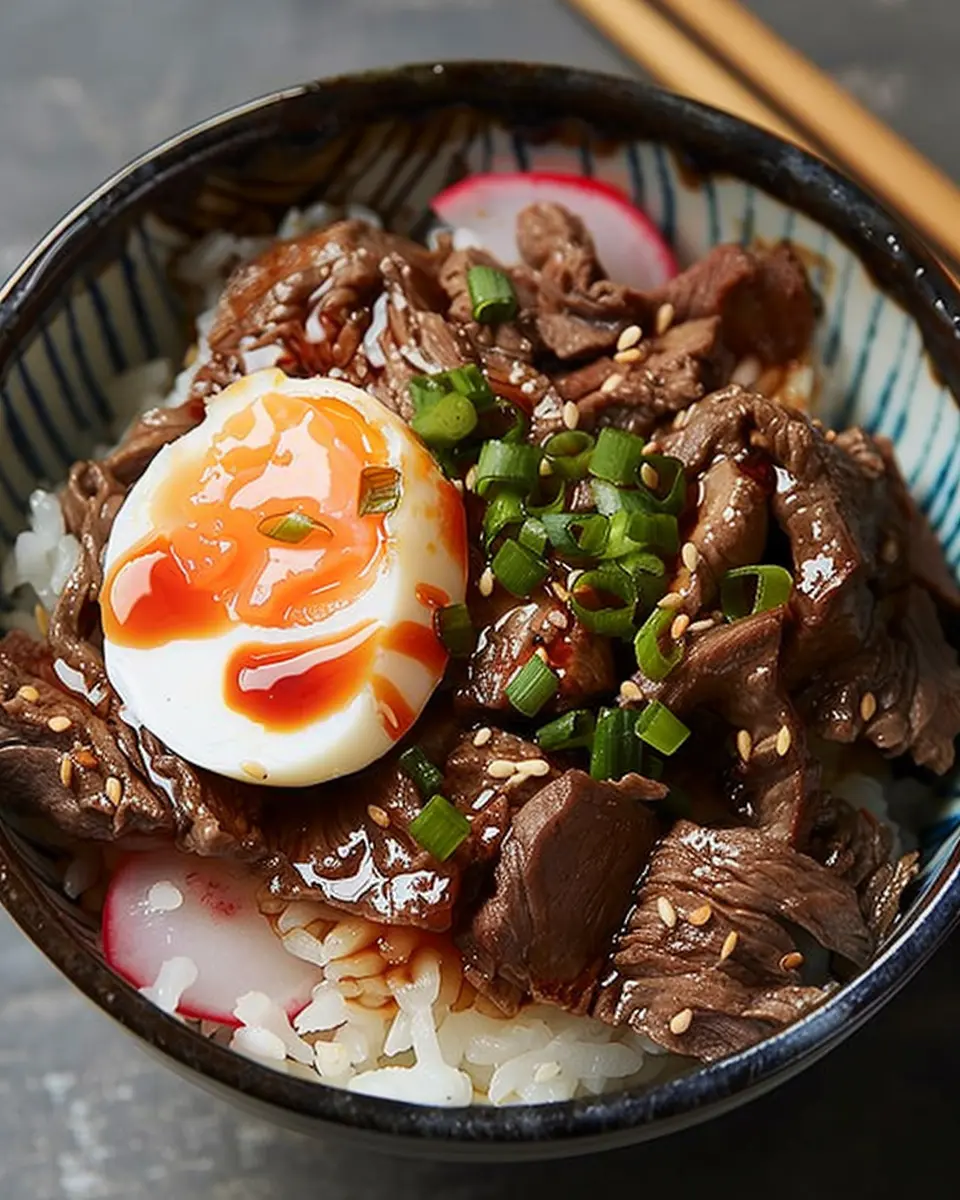
- Soft-boiled Eggs: Adding an egg on top enhances the creaminess and flavor.
- Green Onions: A sprinkle of fresh green onions adds a nice crunch and color.
By experimenting with these ingredients, your gyudon will be uniquely yours! For more ideas, check out Japanese Food Guide for inspiration.
Step-by-step Preparation of Gyudon
Making a delicious bowl of gyudon at home is easier than you might think! This traditional Japanese beef rice bowl is not only comforting but also has a great balance of flavors. Here’s how to prepare it step by step, making your culinary experience enjoyable and rewarding.
Preparing the Rice
Start with the foundation of your gyudon: the rice. Short-grain Japanese rice works wonders here, and it’s easy to see why. It’s sticky, which helps the grains cling to each other, creating the perfect base for your beef and flavorful sauce.
- Rinse the rice thoroughly in cold water until the water runs clear. This helps to remove excess starch and prevents it from becoming mushy.
- Combine the rinsed rice and water in a rice cooker, following the manufacturer’s instructions. Typically, the ratio is about 1 cup of rice to 1.2 cups of water.
- Cook and let it steam for a few minutes after it’s done. This creates fluffy rice that will elevate your gyudon experience.
While the rice cooks, you can tackle the other ingredients!
Freezing and Slicing the Beef
The choice of beef can make or break your gyudon recipe. Thinly sliced beef will absorb flavors beautifully and cook quickly.
- Start by placing your beef in the freezer for about 30 minutes. This makes it easier to slice thinly. Aim for sirloin or ribeye cuts, as they’re tender and rich in flavor.
- Once it’s firm but not frozen solid, use a sharp knife to cut it against the grain into thin strips. Remember, the thinner the better! This ensures that the beef will be both tender and flavorful.
For more information on choosing the right cuts of beef, check out resources from sources such as Beef It’s What’s For Dinner.
Mixing the Stir-fry Sauce
No gyudon is complete without a delicious stir-fry sauce to bring everything together. This is where the magic happens!
- In a mixing bowl, combine equal parts of soy sauce and mirin—a sweet rice wine, which you can substitute with a mixture of apple cider vinegar and brown sugar for a non-alcoholic option.
- Add a dash of sugar and a splash of dashi stock (or chicken broth for a budget-friendly alternative) to create depth in flavor.
- Stir until the sugar has dissolved, and your sauce is ready to go! You’ll find that it smells incredible, making you even hungrier as you prepare the rest.
If you want to know more about dashi, Just One Cookbook has excellent information.
Cooking the Onions
Onions add a delightful sweetness when cooked, complementing the savory flavors of the beef.
- Slice one medium onion thinly. You can use yellow or sweet onions depending on your preference.
- Heat a tablespoon of oil in a frying pan over medium heat. Add the onions and sauté until they become translucent and soft, about 5-7 minutes.
This step is a quick way to draw out the umami flavors that characterize gyudon!
Frying the Beef and Final Assembly
Now, let’s bring everything together for the final moments of excitement!
- In the same pan with the cooked onions, add your sliced beef. Pour in the prepared sauce and stir-fry everything together for 2-3 minutes, or until the beef is cooked through.
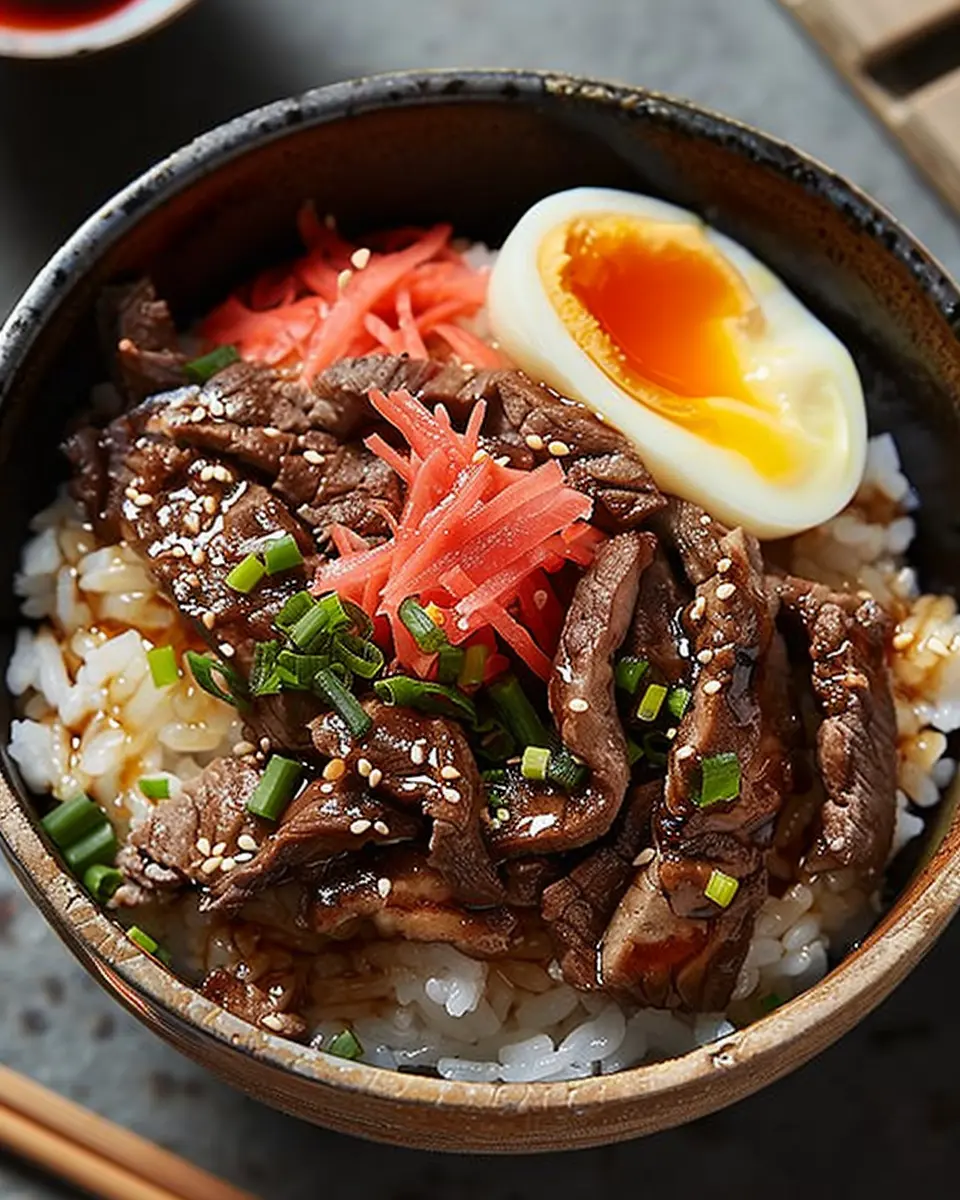
- Once it’s all beautifully mixed, serve your hot, fluffy rice in a bowl, and top it generously with the beef and onion mixture. Garnish with finely chopped green onions or pickled ginger for that authentic touch.
And there you have it—your own homemade gyudon! This dish is not only delicious but also a fantastic way to impress your friends with your culinary skills. Enjoy!
Dive into your next cooking adventure with this gyudon recipe, and don’t forget to share your experience!
Variations on Gyudon
Exploring variations on your gyudon recipe is a fantastic way to keep this beloved dish fresh and engaging. Let’s dive into some creative adaptations that will cater to different tastes and dietary preferences.
Vegetarian Gyudon Options
If you’re looking for a meatless alternative without sacrificing flavor, vegetarian gyudon can be both satisfying and delicious. You can replace the beef with various hearty ingredients:
- Tofu: Firm, marinated tofu can mimic the texture of beef. Simply sauté it until golden before adding your sauce.
- Mushrooms: Shiitake or portobello mushrooms are excellent at absorbing flavors and provide umami richness.
- Seitan: For a more protein-heavy version, seitan can be seasoned similarly to beef to achieve that savory depth.
With these options, you still enjoy a satisfying bowl, paired perfectly with rice and your favorite toppings. Check out resources like Oh She Glows for more vegetarian ideas!
Spicy Gyudon Twist
For those who like a bit of heat, adding a spicy twist to your gyudon can elevate its flavors. Here are a few suggestions to spice things up:
- Chili Oil or Sriracha: Drizzle some chili oil on top or mix a spoonful of Sriracha into your sauce for an unexpected kick.
- Spicy Marinade: Try marinating the beef with gochujang, a Korean chili paste, before cooking. This not only adds heat but a unique flavor profile.
- Cilantro and Jalapeños: For fresh toppings, consider garnishing with chopped cilantro and sliced jalapeños for that extra zing.
These variations on the classic gyudon recipe can make weeknight dinners more exciting while catering to every palate. Don’t hesitate to experiment and share your favorite versions with friends and family!
Cooking Tips and Notes for Gyudon
Tips for Perfectly Cooked Rice
Achieving the ideal rice for your gyudon recipe can make a world of difference. Here’s how to do it:
- Rinse Your Rice: Start by rinsing the rice under cold water until the water runs clear. This removes excess starch, preventing it from becoming gummy.
- Water Ratio: Use a 1:1.2 ratio of rice to water. For example, 1 cup of rice should be cooked with 1.2 cups of water. This will ensure fluffy grains every time.
- Let it Steam: Once your rice is done cooking, let it sit covered for about 10 minutes. This allows the remaining steam to finish the cooking process without burning.
For more tips on rice cooking, you can check out resources from Serious Eats.
How to Slice Beef Like a Pro
Slicing beef properly is key to the tender bites you want in your gyudon. Here’s what to keep in mind:
- Choose the Right Cut: Opt for ribeye or sirloin and freeze for about 30 minutes before slicing. This firms up the meat, making it easier to cut.
- Angle the Knife: Always slice against the grain. Look for the direction of the muscle fibers and cut across them for maximum tenderness.
- Thin Slices: Aim for cuts that are about 1/8 inch thick. This allows the beef to cook quickly and absorb the delicious flavors of the broth.
By using these simple techniques, you’ll elevate your gyudon from good to fantastic!
Serving Suggestions for Gyudon
Creative Ways to Plate Gyudon
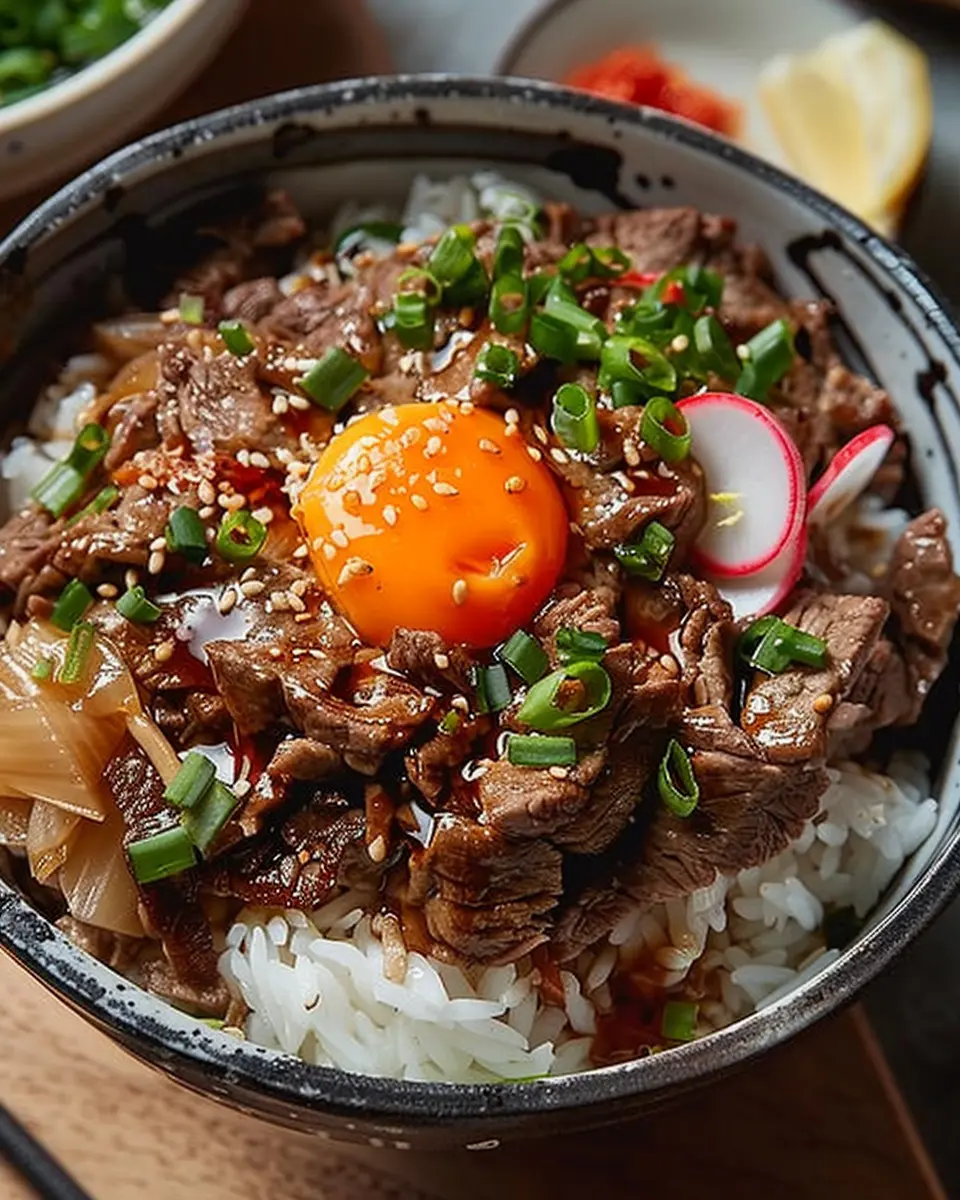
When it comes to enjoying your gyudon recipe, presentation can elevate the experience. Consider using a shallow bowl for a rustic feel, allowing the vibrant colors of the dish to pop. Drizzle some sauce over the top for that glossy finish, and add a sprinkle of chopped green onions or shichimi togarashi for a touch of flair.
You can also layer your ingredients. Start with the rice, then the beef, followed by a beautiful pile of sautéed onions and a raw egg on top. This creates a visually stunning dish that’s sure to impress your dinner guests or yourself on a cozy night in!
Pairing Gyudon with Side Dishes
Enhance your meal by pairing gyudon with delicious side dishes. Traditional options include:
- Miso soup: Light yet flavorful, it’s the perfect start to any Japanese meal.
- Pickled vegetables: They add a delightful crunch and balance the richness of the beef.
- Japanese salad: A simple cucumber salad dressed with rice vinegar can provide a refreshing contrast.
These sides not only complement your gyudon but also create an authentic dining experience. If you’re looking for further inspiration, check out Just One Cookbook for more creative ideas. Happy cooking!
Time Breakdown for Gyudon
Preparation Time
Preparing your gyudon recipe is a breeze and takes about 15-20 minutes, depending on how quickly you can chop veggies and slice your beef. You’ll want to gather all your ingredients—think aromatic onions, tender beef, and your favorite toppings. Prepping in advance can even give you a little extra time to relax!
Cooking Time
Once everything is prepped, cooking your gyudon should take around 10-15 minutes. It’s a quick dish that lets the flavors meld beautifully—perfect for those busy weeknights when you crave something delicious without spending hours in the kitchen.
Total Time
In total, you’re looking at about 30-35 minutes from start to finish. With just under an hour, you can enjoy a homemade meal that rivals any restaurant version. For tips on how to make your meal prepped versions even easier, check out this cooking blog for more inspiration!
Nutritional Facts for Gyudon
When you’re whipping up a comforting bowl of gyudon, it’s not just about the flavor; it’s also essential to consider its nutritional profile. Let’s break down what you’re indulging in.
Calories
An average serving of gyudon typically contains around 600-700 calories. This can vary depending on the specific ingredients and portion sizes, but it’s a hearty meal that can really satisfy your appetite.
Protein Content
Thanks to the tender slices of beef used in this gyudon recipe, you can expect about 30-35 grams of protein per serving. This makes it an excellent choice for those needing to fuel up post-workout or simply aiming to meet their daily protein intake.
Carbohydrates
Accompanying the beef, the rice adds a substantial carbohydrate component, usually around 70-80 grams per serving. This energy staple will keep you energized throughout the day, making gyudon a great option for busy young professionals.
For more insights on healthy meals, check out the USDA’s food data for accurate nutritional information. Balancing your meals is key, and gyudon can fit perfectly into a healthy, varied diet!
FAQs about Gyudon
If you’re diving into the delicious world of Gyudon, you probably have some questions. Let’s tackle a few common queries to help you make the most of your gyudon recipe adventure!
Can I use other types of beef for Gyudon?
Absolutely! While traditional Gyudon often uses thinly sliced beef (like ribeye), you can experiment with different cuts that suit your taste and budget. Options include sirloin, flank, or even tenderloin. Just keep in mind that some cuts, like chuck, may need a bit more marinating time to achieve that tender, melt-in-your-mouth quality.
What’s the best way to store leftovers?
Storing leftovers properly can help you enjoy your Gyudon even after the initial meal. Place cooled Gyudon in an airtight container and store it in the refrigerator for up to three days. For longer storage, consider freezing it! Just make sure to pack it well to prevent freezer burn. When you’re ready to eat, defrost in the fridge overnight, then reheat gently on the stove or in the microwave, adding a splash of water if it seems dry.
Can I make Gyudon ahead of time?
Yes, you can prepare the components of your Gyudon in advance! Cook the beef and onion mixture ahead of time, and store it separately from the rice. Preparing a day in advance allows the flavors to meld beautifully, making your leftovers even more delicious. Just reheat the beef mixture and serve it over freshly steamed rice for a quick, satisfying meal.
For more tips on how to create authentic Japanese dishes, check out Just One Cookbook, a great resource for anyone wanting to master the art of Japanese cooking!
Conclusion on Gyudon Recipe
Why You Should Try Making Gyudon at Home
Trying out this gyudon recipe at home is not just about creating a delicious meal; it’s also a delightful culinary adventure. When you cook gyudon, you’re embracing the simplicity and richness of Japanese flavors, which can be a wonderful break from your usual dinner rotation.
In addition, preparing gyudon allows you to customize ingredients, such as swapping regular beef for tender slices of turkey bacon or adding your favorite vegetables. You’ll enjoy the comforting aroma filling your kitchen and, of course, the satisfaction of sharing a homemade dish with friends or family.
The effort of making gyudon is well worth it—your taste buds will thank you! Plus, it’s a fantastic way to impress guests with your cooking skills. If you want to learn more about Japanese cuisine, check out this article on Asian cooking techniques. Ready to get cooking?
PrintGyudon Recipe: Easy Homemade Comfort with Turkey Bacon Delight

Gyudon is a comforting Japanese dish that features beef and onions simmered in a savory sauce, served over rice. This recipe offers a twist with turkey bacon for a healthier option.
- Prep Time: 10 minutes
- Cook Time: 15 minutes
- Total Time: 25 minutes
- Yield: 2 servings 1x
- Category: Main Dish
- Method: Stovetop
- Cuisine: Japanese
- Diet: Low-fat
Ingredients
- 1 cup jasmine rice
- 4 slices turkey bacon
- 1 medium onion, thinly sliced
- 1 cup beef broth
- 1/4 cup soy sauce
- 1 tablespoon mirin
- 1 tablespoon sugar
- 2 green onions, chopped
Instructions
- Cook the jasmine rice according to package instructions.
- In a skillet, cook the turkey bacon until crispy. Remove and set aside.
- In the same skillet, add onions and sauté until translucent.
- Add beef broth, soy sauce, mirin, and sugar to the skillet. Bring to a boil.
- Reduce heat and simmer for 5 minutes.
- Add the crispy turkey bacon back into the skillet and stir.
- Serve the mixture over cooked rice and top with chopped green onions.
Notes
- For a richer flavor, add a dash of sesame oil.
- Feel free to substitute turkey bacon with regular bacon if desired.
Nutrition
- Serving Size: 1 bowl
- Calories: 400
- Sugar: 5g
- Sodium: 800mg
- Fat: 12g
- Saturated Fat: 3g
- Unsaturated Fat: 6g
- Trans Fat: 0g
- Carbohydrates: 60g
- Fiber: 2g
- Protein: 18g
- Cholesterol: 30mg
Keywords: Gyudon, turkey bacon, Japanese recipe, comfort food